Apostasy in Classical Islamic Law: Between Texts, Practices of the Companions, and Interpretative Debates
Introduction
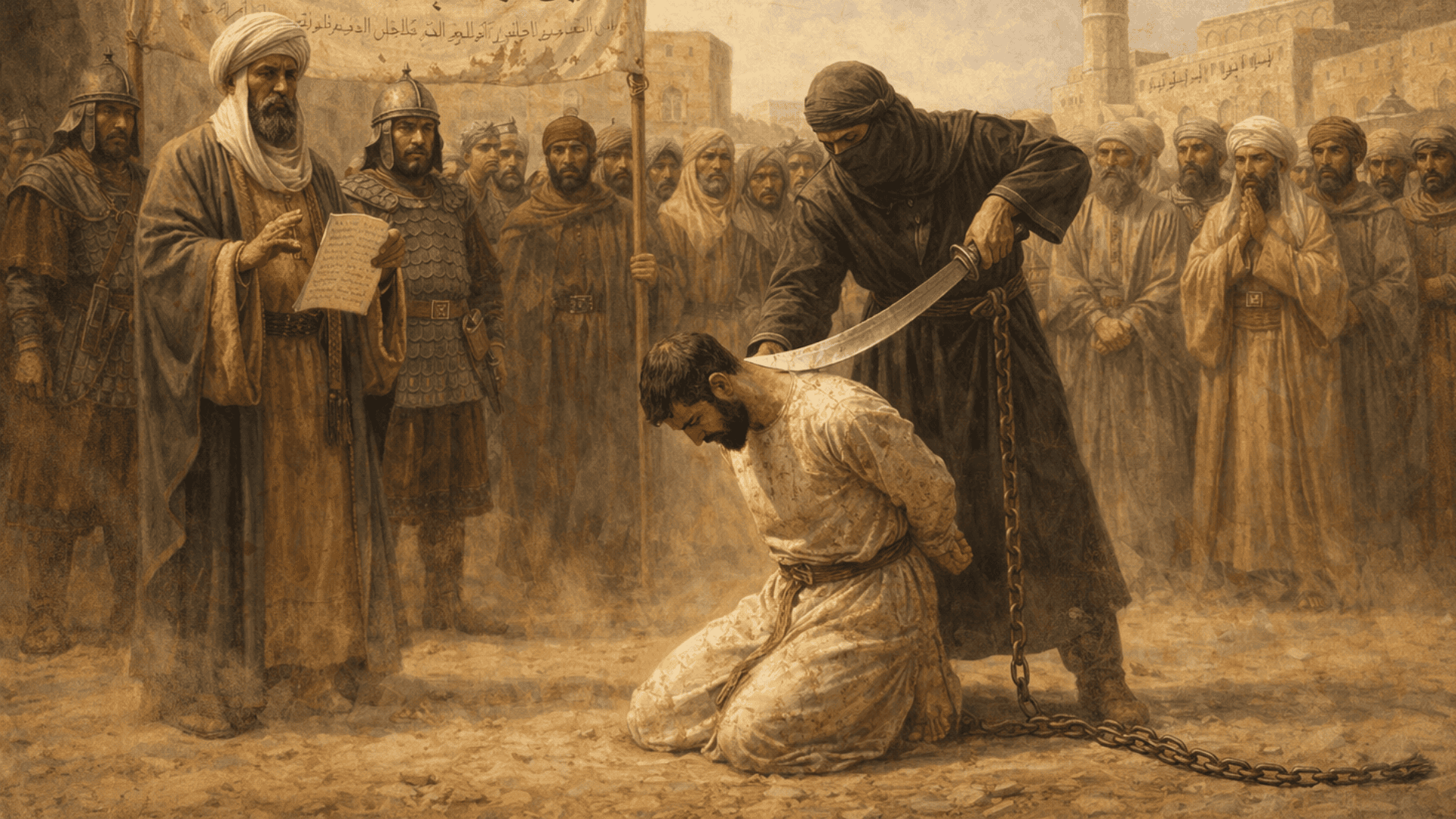
The issue of apostasy occupies a central place in classical Islamic legal thought, touching on fundamental theological, social, and political issues. Defined as the departure from Islam after having adhered to it, apostasy, called ridda, has been extensively discussed by jurists based on scriptural texts and the practices of the first Muslim generations.
The main sources cited are the Quran, the Prophetic tradition, and the example of the Prophet's companions. From these elements, scholars have developed legal positions that have, for many, converged towards the idea of a penal sanction. However, the exact nature of this sanction and its justifications have given rise to different interpretations.
Textual Foundations
Several hadiths are at the heart of the jurists’ reflection. Among them is a text reported by Ibn ‘Abbâs:
"Whoever changes their religion, kill him." (Sahîh al-Bukhârî)
Another hadith, reported by Ibn Mas‘ûd, specifies:
"The blood of a Muslim is permissible only in three cases: adultery after marriage, a life for a life, and one who renounces his religion and separates from the community." (Sahîh al-Bukhârî and Sahîh Muslim)
These texts have been understood by many jurists as establishing a general rule.
A Matter of Interpretation
The interpretation of these hadiths has nevertheless sparked debates. A first reading, prevalent in classical law, considers that the sanction is linked to the breaking of faith itself. Another reading suggests that these texts concern situations where apostasy is accompanied by a break with the community, especially in a context of conflict or betrayal.
The issue is thus whether the sanction arises from a purely doctrinal principle or a response to a social and political threat.
The Companions as Reference
In Islamic tradition, the understanding of the Prophet’s companions is considered a reliable model of interpretation.
The Quran states:
"The first among the Emigrants and the Helpers... Allah is pleased with them and they are pleased with Him." (Quran, 9:100)
A hadith also emphasizes their role:
"Adhere to my Sunna and the rightly guided Caliphs." (At-Tirmidhî, n°2676)
Practices Attributed to the Companions
Several accounts report how certain companions dealt with cases of apostasy.
Regarding Ali ibn Abi Talib, it is reported that he executed heretics. Ibn Abbas is quoted saying:
"I would not have burned them... but I would have killed them, in accordance with the saying: 'Whoever changes his religion, kill him.'" (Sahîh al-Bukhârî)
Another account mentions that Mu‘âdh ibn Jabal, in the presence of Abû Mûsâ al-Ach‘arî, refused to sit until an apostate was executed (Sahîh al-Bukhârî)
Other traditions attributed to Omar ibn al-Khattab, Abu Bakr, or Othman ibn Affan mention a procedure including an invitation to repent followed by execution in case of refusal (Ibn Abî Shayba, ‘Abd al-Razzâq)
The Consensus of the Jurists
In classical literature, several scholars assert the existence of a consensus on the issue.
Ibn Taymiyya writes:
"The Quran and the Sunna indicate that the apostate must be executed, even if he does not fight." (Majmû‘ al-Fatâwâ, 20/100)
Imam As-San‘ânî states:
"The hadith is a proof of the obligation to kill the apostate, and this is a matter of consensus." (Subul as-Salâm, 2/383)
The Positions of Legal Schools
The four Sunni schools have incorporated these elements into their legal constructs.
Among the Hanafis:
"Either he returns to Islam, or he is executed." (Radd al-Muhtâr, 4/226)
Among the Malikis:
"If he does not express his repentance, the sanction is death." (At-Tawdîh, 8/219)
Among the Shafi‘ites:
"If they persist, they are executed." (Tuhfat al-Muhtâj, 9/96)
Among the Hanbalis:
"Scholars are unanimous on the obligation to kill the apostate." (Kashshâf al-Qinâ‘, 6/168)
There is, however, a divergence among Hanafis regarding the female apostate, who is generally imprisoned rather than executed.
Conclusion
The study of apostasy in classical Islamic law highlights a set of positions based on texts, the practice of the companions, and legal reasoning. It also reveals the existence of debates on the nature of the sanction and its foundations.
Even today, this issue continues to provoke discussions, particularly in light of contemporary concerns related to freedom of conscience and the interpretation of religious sources.