Jesus in the Quran: Singular Prophet or Theological Inconsistency?
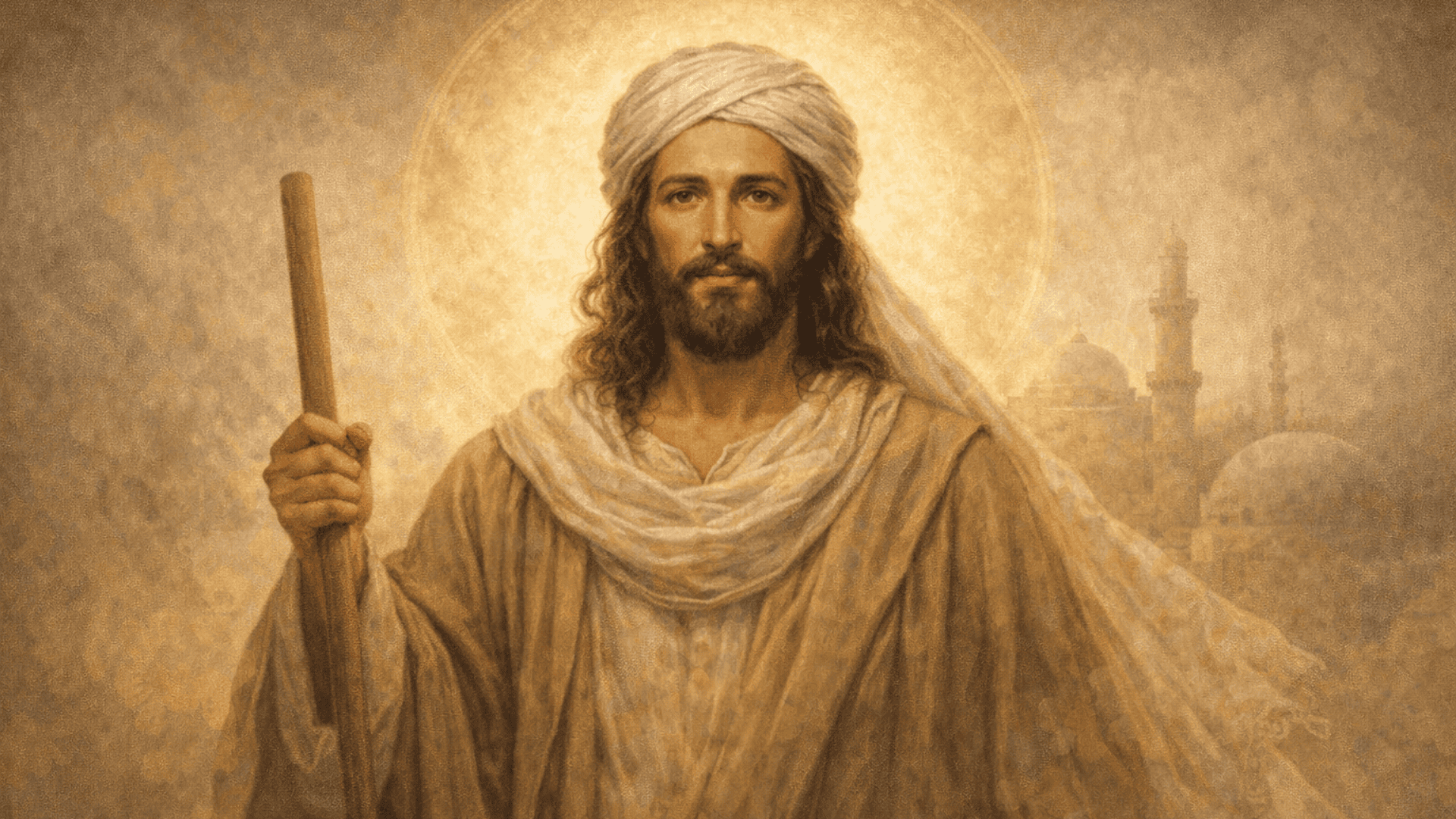
Introduction
In the Quran, Jesus—referred to as Issa—occupies a very special place. He is presented as a simple prophet, on the same level as Abraham, Moses, or Muhammad. However, several elements of his life radically distinguish him from other prophetic figures in Islam: a miraculous birth, exceptional miracles, a unique relationship with the Spirit of God, and above all, a total absence of sin.
This uniqueness raises a major theological question: how can Islam assert that Jesus is just an ordinary prophet while attributing to him unique characteristics, never equaled by any other envoy?
A Unique Miraculous Birth
The Quran clearly states that Jesus was born of a virgin, without the intervention of a human father. The account is explicit:
"She said: 'How can I have a son when no man has touched me, and I have not been unchaste?' He said: 'So it will be. It is easy for Me… and We will make him a sign for the people and mercy from Us.'" (Surah 19:16-21)
Jesus is thus presented as a “sign” (ayah) coming directly from God. This supernatural birth sets him apart from all other prophets, including Muhammad, who was born in the usual manner.
This point strongly aligns the Quran with the Gospel account:
“How will this be, since I am a virgin? […] The Holy Spirit will come upon you.” (Luke 1:34-35)
A Prophet Supported by the Spirit of God
The Quran also attributes extraordinary miracles to Jesus and asserts that he was supported by the Holy Spirit:
"We gave Jesus, son of Mary, clear proofs and supported him with the Holy Spirit." (Surah 2:87; see also 5:110)
He is also presented as a bearer of wisdom:
"I have come to you with wisdom and to clarify some of your disagreements." (Surah 43:63)
These elements confirm that Jesus occupies an exceptional position even within the Quran itself.
Jesus, the Only Sinless Prophet
An even more striking point emerges when comparing Jesus to other prophets.
The Quran and the hadiths explicitly mention the faults of several great figures:
Adam disobeys God (Surah 20:121)
Moses kills a man
Abraham lies multiple times
Jonah refuses his mission
In the famous hadith of "the great intercession," each prophet acknowledges his fault and refuses to intercede… except for Jesus:
“[Jesus] mentioned no sin.” (Sahih al-Bukhari; Sahih Muslim)
Even Muhammad is called to seek forgiveness:
"Seek forgiveness for your sin." (Surah 47:19)
However, no verse in the Quran attributes any sin to Jesus. This silence is all the more remarkable given that the Quran presents itself as a "detailed explanation of all things" (Surah 12:111).
An Absence of Explanation in Islam
The Quran thus asserts two things:
Jesus is a simple prophet
Jesus is unique among the prophets
But it provides no coherent explanation to justify this uniqueness.
Why:
a miraculous birth?
a sinless life?
a particular proximity to God?
No clear theological answers are given in the classical Islamic sources.
The Refusal of the Crucifixion
One of the major points of divergence between Islam and Christianity concerns the crucifixion:
"They neither killed him nor crucified him; but it was made to appear so to them." (Surah 4:157)
According to this version, Jesus was not crucified. But this assertion poses several problems:
It contradicts ancient historical testimonies
It supposes a widespread illusion
It implies that the disciples were deceived
However, crucifixion is considered by historians as an extremely solid fact.
Historian Bart Ehrman writes:
"One of the most certain facts of history is that Jesus was crucified under Pontius Pilate." (The Historical Jesus, 2000, p.162)
A Christian Coherence Absent from the Quran
Unlike the Quran, the New Testament offers a coherent explanation of the whole:
Jesus is born miraculously
He lives sinlessly
He dies as a sacrifice
He resurrects
His moral perfection is necessary to accomplish salvation:
"A lamb without blemish or defect, the Christ." (1 Peter 1:18-19)
Already in the Old Testament:
"The lamb must be without defect." (Leviticus 22:20)
Christian theology perfectly connects:
birth → innocence → sacrifice → salvation
A Hard-to-Explain Singularity
In Islam, Jesus appears as:
miraculously born
without sin
endowed with extraordinary powers
close to God in a unique way
Yet he is still reduced to a mere prophet.
This tension creates a real theological difficulty. Jesus becomes what the Bible calls:
"A stone of stumbling." (1 Peter 2:8)
Conclusion
The Quran recognizes Jesus with unique characteristics in the entire history of the prophets. Yet, it refuses to draw the theological consequences from them.
Where Christianity sees deep coherence—Jesus as the incarnate Word, perfect and savior—Islam juxtaposes strong assertions without proposing a synthesis.
Thus, far from resolving the question, the figure of Jesus in the Quran seems to open an internal tension: that of a man presented as unique… yet theologically reduced to the ordinary.