The Rise of Islam in France: Faced with an Unwavering Islamic Fervor, the Urgent Need for a Christian Awakening!
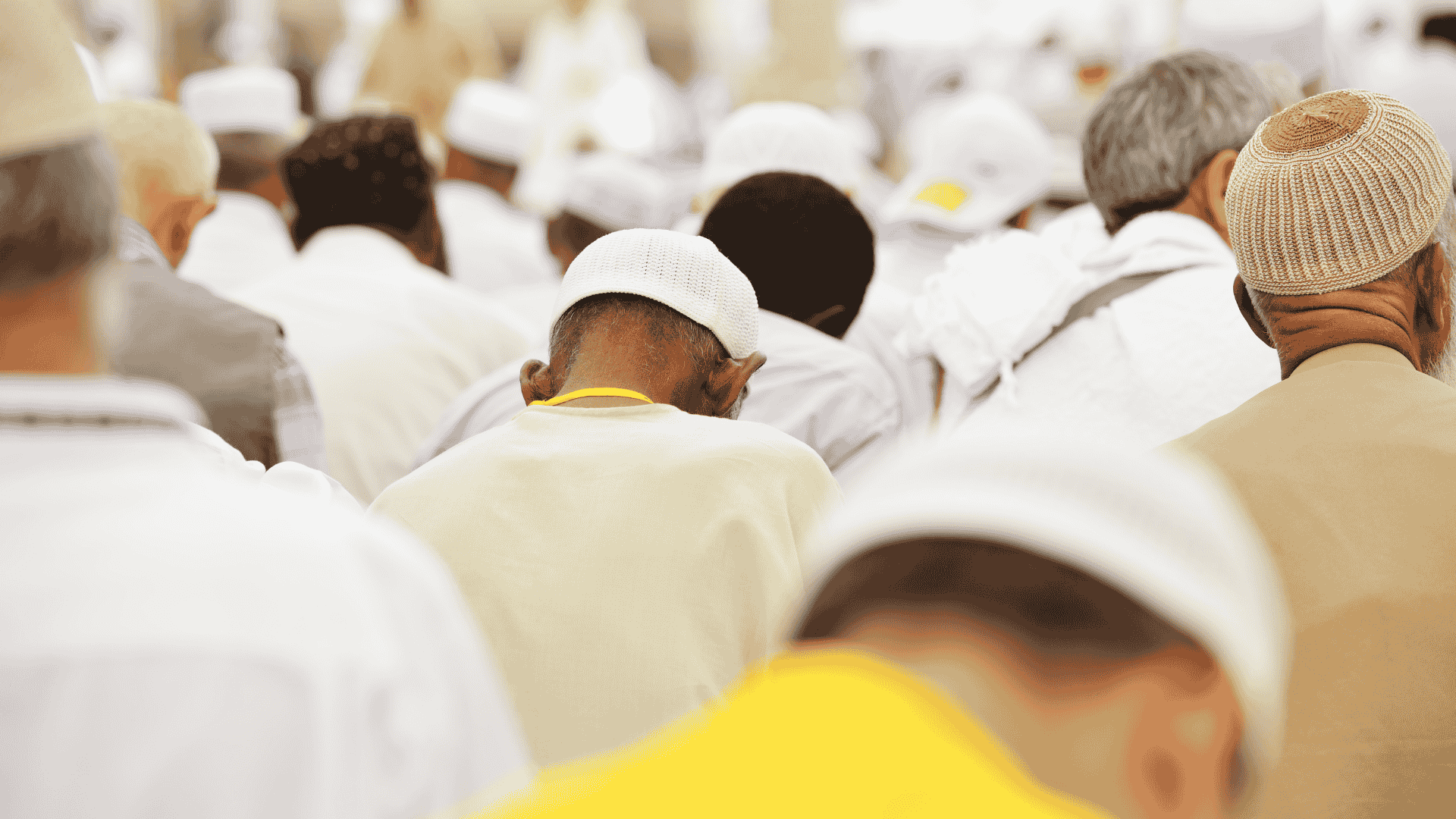
The figures are there—relentless and unsettling. They depict a France whose spiritual landscape has changed with historical speed and should serve as an electric shock to motivate a true Christian renewal, for Islam, meanwhile, shows no sign of slowing down. In 1985, Muslims represented 0.5% of the population; today they are 7%, a dramatic increase over forty years, while Christianity has experienced continuous erosion.
The study conducted by Ifop, titled “Overview of the Relationship to Islam and Islamism among Muslims in France” (November 2025), does not merely quantify a presence; it reveals an intensity of faith and a cultural shift that demands attention. While Catholicism has collapsed—from 83% of the population in 1986 to 43% in 2025—Islam is taking root, supported by a youth whose fervor surpasses that of their elders.
A blazing religiosity driven by youth
Far from theories about the inevitable secularization of modern societies, Islam in France displays spectacular vitality. Today, 80% of French Muslims describe themselves as “religious,” compared with only 48% on average among followers of other faiths. What strikes the observer is the reversal of the generational curve: the younger Muslims are, the more religious they are.
While 73% of Muslims aged 50 and over consider themselves religious, the figure rises to a staggering 87% among those aged 15–24. This data contradicts the idea of assimilation through secularization. On the contrary, we are witnessing a powerful identity reaffirmation: 62% of Muslims pray daily (compared to 18% for other religions), and this practice is even more pronounced among young people (67%).
Orthopraxy as a social marker
This fervor is not confined to private devotion; it structures public space and social rhythms. Observance of the Ramadan fast has become the absolute norm, practiced fully by 73% of Muslims—and by as many as 82% of those under 25.
Visibility of religious affiliation is also increasing through clothing. In 2025, 31% of Muslim women wear the veil, a figure that has nearly doubled since 2003 (16%). Again, the generational divide is stark: 44% of young women aged 15–24 wear it, compared with only 16% of those over 50. For 80% of those who wear it, the primary reason is fulfilling a “religious obligation.”
Similarly, attendance at Friday mosque prayers—a barometer of communal practice—has skyrocketed from 7% in 1989 to 35% in 2025.
A cultural and epistemological rupture
Ifop’s data highlights a widening gap between the Islamic worldview and the Western cultural foundation, particularly in the relationship to truth and law.
Science vs. Faith: When there is a conflict between science and religion on the creation of the world, 65% of Muslims believe religion is correct. This rises to a staggering 81% among those aged 15–24.
God’s Law vs. the Law of the Republic: On crucial matters (family, inheritance), 44% of Muslims would choose the rules of their religion over French law. Among 15–24 year olds, a majority (57%) would prioritize sharia over the Republic.
More concerning still, 46% of Muslims believe that sharia should be applied—at least partially—in non-Muslim countries. This desire for legal hegemony is shared by 59% of those under 25.
The halo of Islamism
The study also reveals increasing permeability to radical ideas. While the term “Islamist” once acted as a deterrent, attitudes are shifting. Today, 38% of Muslims approve of at least “some” Islamist positions, a figure that rises to 57% among young Muslims.
Sympathy for structured movements such as the Muslim Brotherhood now concerns nearly a quarter of Muslims (24%) and nearly a third of young people (32%).
These statistics paint the picture of a religion in full expansion—confident in itself and its doctrines, untouched by doubt. Faced with this reality, Christian decline is not a fatality but a call to action. Islam will not weaken on its own; its demographic and spiritual vitality is a reality with which we must contend.
That is why the conclusion is self-evident: it is time to work toward a true Christian renewal—bold and unapologetic. This is the mission undertaken by Nour Al Aalam. More than ever, it is necessary to expose the intellectual and historical flaws of Islam while proclaiming the Good News of Christianity to Muslims. For in the face of an assertive faith, only a faith even more alive and founded in Truth can offer a salutary alternative.