Saint Ignatius of Antioch: The Doctor of Unity and the Witness of Christ
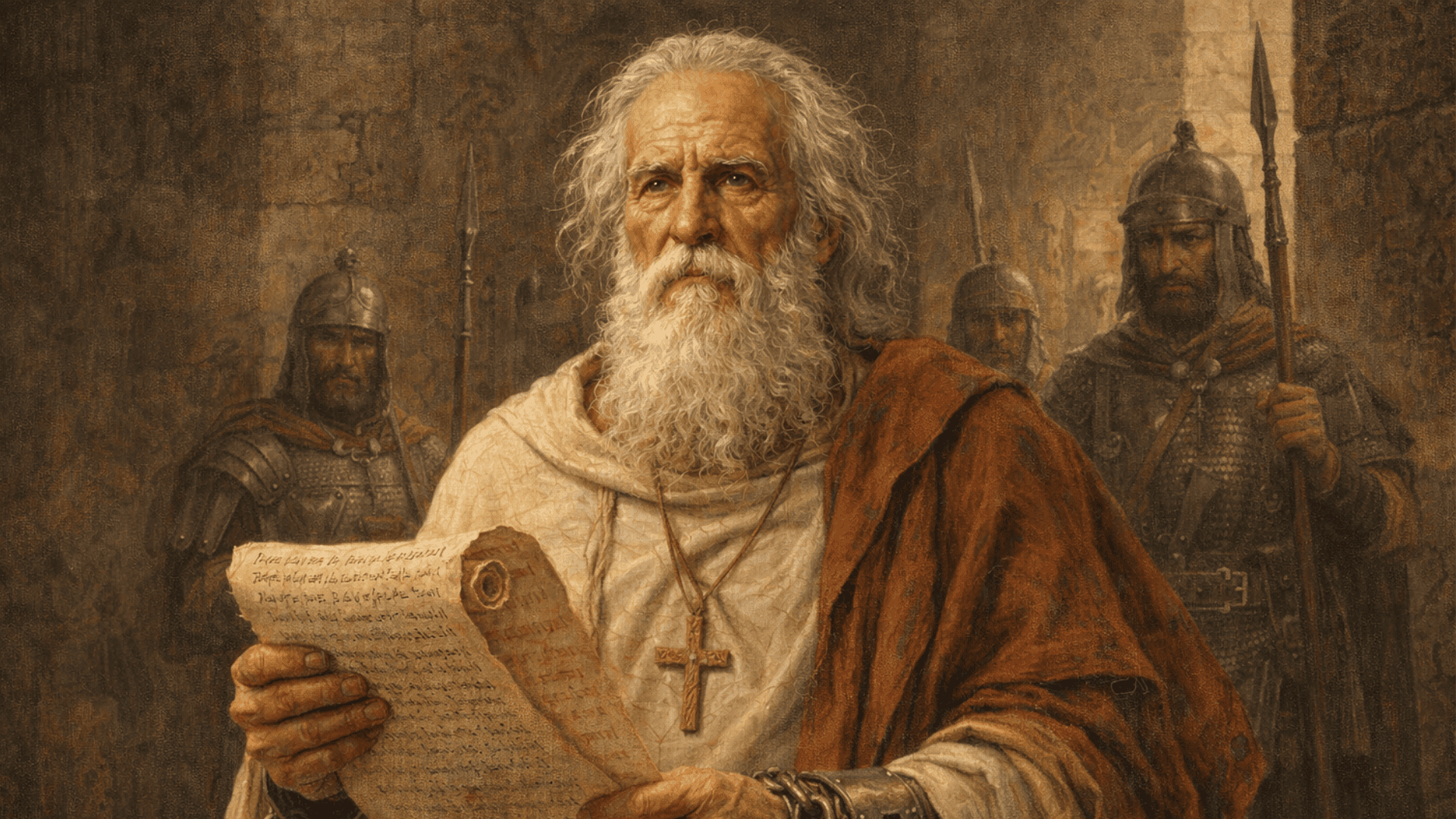
A major figure of the early centuries of Christianity, Ignatius of Antioch holds a unique place among the Fathers of the Church. The third bishop of Antioch, he led the Christian community at the turn of the 1st and 2nd centuries, between the direct legacy of the apostles and the early institutional structures of the Church. His life and writings offer valuable testimony on the identity of nascent Christianity.
A path marked by martyrdom
The fate of Ignatius is inseparable from his final journey. Arrested in Syria because of his faith, he is brought to Rome under escort to be executed, probably during the reign of Emperor Trajan.
This journey, far from being a simple transfer, becomes a true pastoral path. Escorted by guards he himself describes as "ten leopards," Ignatius travels through Asia Minor and seizes each stop as an opportunity to meet Christian communities, encourage them, and warn them against doctrinal divisions.
It is during this journey that he writes seven letters, today considered fundamental to early Christian theology. Some are written in Smyrna, where he meets Polycarp of Smyrna, others in Troas. These writings bear witness to an intense faith and a profound desire for union with Christ, even unto martyrdom.
Unity, the heart of his thought
Ignatius is often described as a "doctor of unity." For him, unity is not just an organizational requirement: it has its origin in God Himself. The unity of Christians should, according to him, reflect divine unity.
This vision unfolds according to two axes.
First, unity with Christ. Ignatius expresses an ardent desire for communion, going so far as to implore the faithful of Rome not to prevent his execution, which he perceives as participation in the Passion:
he aspires to "imitate the Passion of his God."
Then, the unity of the Church. Ignatius is the first known author to use the term "catholic" to refer to the Church in its universality. He emphasizes the necessity of visible cohesion, founded on an organized structure.
A Church structured around the bishop
For Ignatius, ecclesial unity rests on a clear hierarchy: bishop, priests, and deacons. This organization, according to him, is not political but sacramental.
He uses strong imagery to illustrate this harmony, comparing the Church to a kithara whose strings must be perfectly tuned. His exhortation is unambiguous:
"Do nothing concerning the Church without the bishop."
In this logic, he also recognizes a particular role for the Church of Rome. In his letter to the Romans, he asserts that it "presides in love," an expression often interpreted as an early acknowledgment of a specific role in the unity of the Churches.
A faith anchored in the reality of Christ
Facing currents that questioned the true humanity of Christ, Ignatius develops a strongly incarnational Christology. He insists on the historical reality of Jesus:
born of the Virgin, having truly suffered, and truly resurrected.
This theological realism aims to preserve the unity of the faith against interpretations deemed deviant.
A life and death in coherence
Ignatius' journey ends in Rome, where he is delivered to the beasts in the Flavian amphitheater. His martyrdom appears as the culmination of a life wholly turned towards unity — with Christ and with the Church.
Through his letters and testimony, Ignatius of Antioch embodies a form of Christianity still close to its apostolic origins, where faith, ecclesial structure, and self-giving are united as one.