The Notion of "Gospel": Between Oral Message and Written Text
Introduction
In contemporary religious language, the word "Gospel" is almost systematically associated with the four canonical accounts of Matthew, Mark, Luke, and John. Yet, an etymological and contextual analysis of the Scriptures reveals a fundamental distinction between the Gospel as a literary work and the Gospel as a message. This semantic confusion is often at the heart of debates on the nature of Christian revelation. The central issue is thus to define what Christ and his apostles meant by this term: was it a book to be disseminated or a "Good News" to be proclaimed?
Etymology at the Service of the Message: The "Good News"
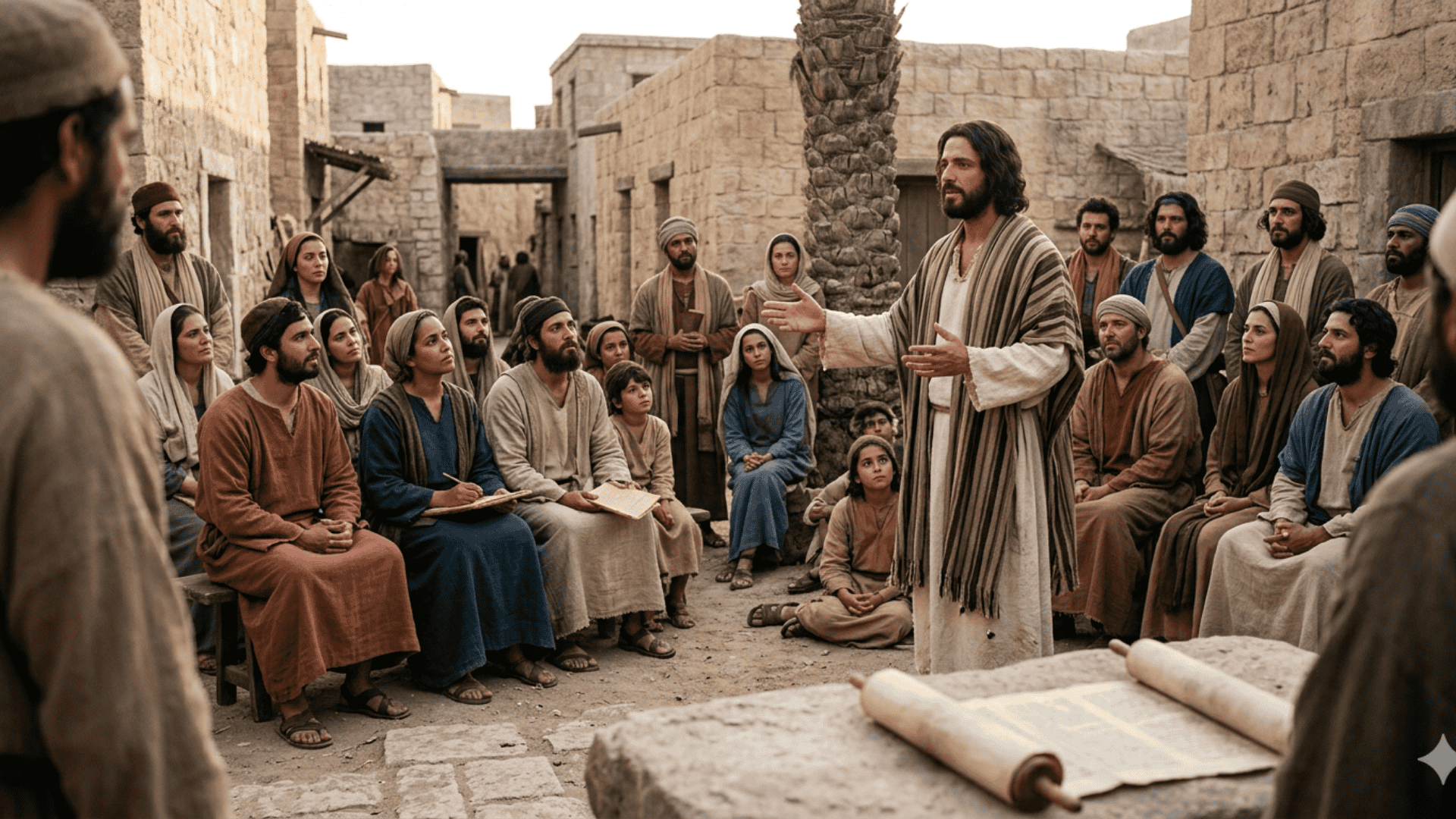
The word "Gospel" finds its source in the Greek "euangelion," which literally means "Good News." In the context of Jesus' ministry, the object of faith was not a written biographical account, but the very content of his preaching: the announcement of salvation and the nearness of the Kingdom of God.
Scripture highlights this oral and active dimension:
The Teaching of Jesus: It is noted that the Lord traveled through towns "preaching the Good News of the Kingdom" (Matthew 4:23). His sermons (Matthew 5-7) and his interpretations of prophecies (Luke 24:27) constituted this living Gospel.
The Mission of the Disciples: Before his Ascension, Christ did not command the writing of a book but the transmission of a teaching. He asked his disciples to "make disciples of all nations" and to teach them to "observe everything he had commanded" (Matthew 28:19-20).
The Gospel According to Apostle Paul: A Revelation, Not a Book
The usage of the term by Apostle Paul confirms this primacy of the message over the written medium. Paul frequently uses the word "Gospel" to refer to the content of his preaching, although he never wrote a Gospel in the sense of a biographical account of Jesus’ life.
In his epistles, he clarifies the source and nature of his message:
"The Gospel which was preached by me is not of human origin; for I did not receive it, nor was I taught it by any man, but by a revelation of Jesus Christ" (Galatians 1:11-12).
Here, the Gospel is synonymous with spiritual and doctrinal revelation. When he goes to Jerusalem to present the Gospel he preaches among the Gentiles (Galatians 2:2), he refers to his activity of proclamation and testimony, not the presentation of a manuscript. The Gospel is thus a "rule of conduct" and a truth to which one must conform, as he reproaches those who did not "walk according to the truth of the Gospel" (Galatians 2:14).
Analysis: From Literal to Technical Meaning
It is essential to distinguish two levels of understanding of the term, as this distinction resolves many theological tensions:
The etymological meaning (The message): This is the original meaning used by Jesus and the apostles. It denotes the oral preaching, the teaching of salvation, and the very person of Christ as the "Good News."
The technical meaning (The book): This is the later acquired meaning to designate the written biographies of Jesus.
Inconsistency arises when the technical meaning (the book) is projected onto biblical passages where only the etymological meaning (the message) is relevant. Jesus did not bring an already written book, but he himself was the bearer and the subject of a message which was later recorded by the four evangelists under the inspiration of the Holy Spirit (Luke 24:45).
Conclusion
In conclusion, the Gospel in its biblical essence is not initially a material object or a fixed text, but a dynamic proclamation. Christ preached the Good News of the Kingdom, and the apostles continued this mission orally before it was committed to writing for future generations. Understanding the Gospel in its literal sense allows one to grasp Jesus' profound intention: not adherence to a pre-existing book, but faith in a message of salvation and transformation of life.